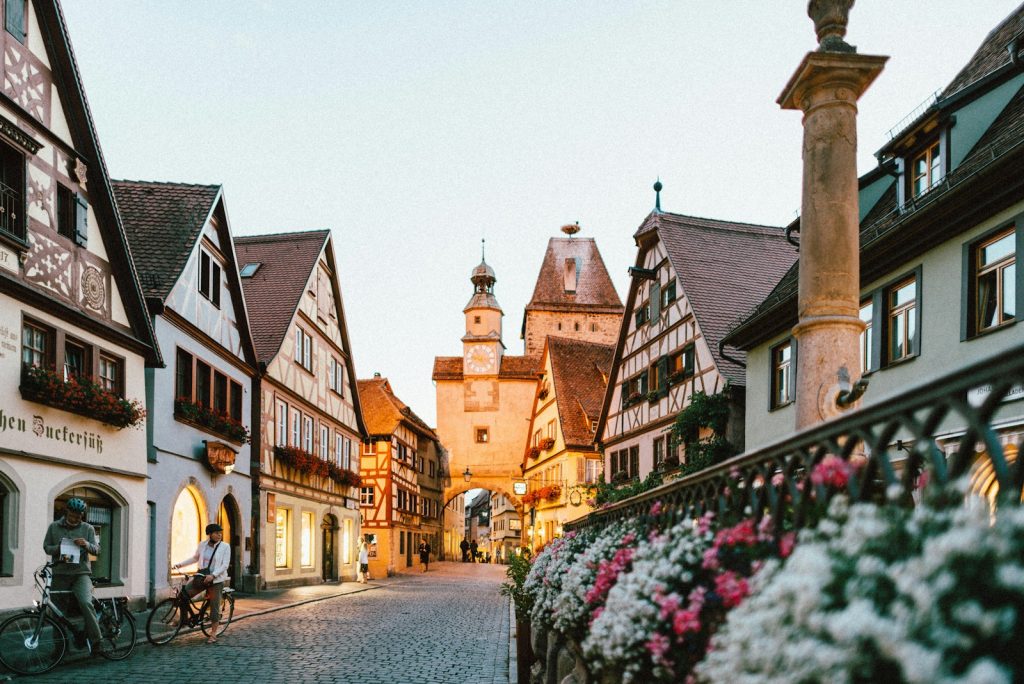
Let’s head to
Germany
At Globe Doorway Education Consultancy, we specialize in providing comprehensive support for students aspiring to study in Germany, one of the world’s leading educational destinations. Our services are tailored to ensure a smooth transition and successful academic journey in Germany.

Interesting Facts About Germany:
- Heart of Europe: Germany, located in the heart of Europe, is renowned for its pivotal role in continental history, vibrant culture, and influential economic prowess.
- Cultural Richness: This country offers a rich tapestry of history and modernity, where ancient castles and futuristic architecture coexist, reflecting its diverse cultural heritage.
- Economic Hub: As Europe’s largest economy and the fourth largest worldwide, Germany stands as a beacon of industrial innovation and stability, making it a prime destination for aspiring professionals.
- Educational Excellence: Home to some of the world’s top universities, Germany offers high-quality education with a strong emphasis on research and development, particularly noted in fields like engineering, medicine, and the sciences.
- Natural Landscapes: Beyond its urban centers, Germany boasts beautiful landscapes ranging from the rugged Alps in the south to the serene North Sea coastlines, offering plentiful outdoor activities for nature lovers.
Happy Students
Online Sessions
Aupairs
Universities
“…Discover Germany, a land where rich history meets innovation. Experience world-class education, high academic standards, and cutting-edge technology. Embrace a fulfilling lifestyle in a country known for its cultural heritage, efficient public transportation, and welcoming communities. Germany offers a safe, vibrant environment, perfect for personal and academic growth…”
Our Students
More about studying in Germany
The Common European Framework of Reference for Languages (CEFR) outlines six proficiency levels for language learners, including German. These levels are:
- A1 (Breakthrough): At this level, learners can understand and use familiar everyday expressions and very basic phrases aimed at the satisfaction of needs of a concrete type. They can introduce themselves and others and can ask and answer questions about personal details such as where they live, people they know, and things they have.
- A2 (Waystage): A2 learners can understand sentences and frequently used expressions related to areas of most immediate relevance (e.g., basic personal and family information, shopping, local geography, employment). They can communicate in simple and routine tasks requiring a simple and direct exchange of information on familiar and routine matters.
- B1 (Threshold): At the B1 level, learners can understand the main points of clear standard input on familiar matters regularly encountered in work, school, leisure, etc. They can deal with most situations likely to arise while traveling in an area where the language is spoken, produce simple connected text on topics that are familiar or of personal interest, and describe experiences and events, dreams, hopes, and ambitions, and briefly give reasons and explanations for opinions and plans.
- B2 (Vantage): B2 learners can understand the main ideas of complex text on both concrete and abstract topics, including technical discussions in their field of specialization. They can interact with a degree of fluency and spontaneity that makes regular interaction with native speakers quite possible without strain for either party. They can produce clear, detailed text on a wide range of subjects and explain a viewpoint on a topical issue giving the advantages and disadvantages of various options.
These levels provide a framework for assessing and describing a learner’s language proficiency in German, ranging from basic to advanced competency.

Affordable Education
Most public universities in Germany do not charge tuition fees even for international students, thanks to government funding. However, students are still responsible for a nominal semester fee which covers administrative costs and also includes a public transport ticket.

Excellence in Engineering and Technology
Germany is renowned for its engineering programs and technical universities. Institutions like Technical University of Munich and RWTH Aachen are highly ranked globally, making them attractive for students interested in engineering, technology, and innovation.

Research Opportunities
Germany is a leader in scientific research, hosting several research institutions like the Max Planck Society and the Helmholtz Association. Students often have the opportunity to engage in cutting-edge research during their studies.

Vibrant Student Life
Cities like Berlin, Munich, and Hamburg offer vibrant student life with affordable living costs compared to other parts of Europe. These cities are hubs of cultural diversity and innovation, providing a stimulating environment for international students.

Work Opportunities Post-Graduation
Germany offers a stay-back option which allows international students to stay in the country for 18 months after graduation to look for a job. The strong German economy offers numerous employment opportunities for graduates, especially in engineering, IT, and healthcare sectors.